
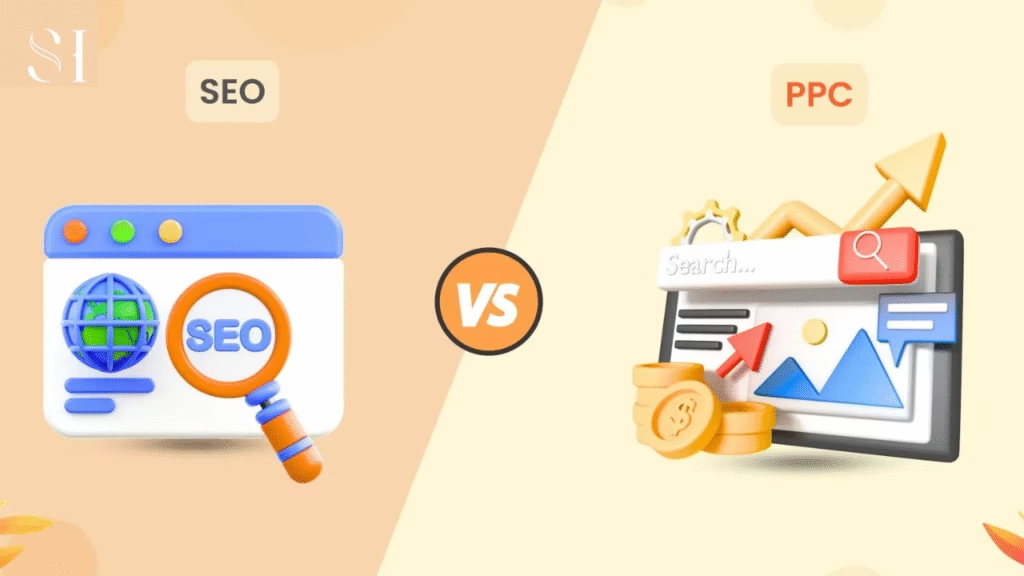
Introduction: The Central Dilemma of Digital Marketing
Imagine you’ve just launched a new website for your business. You’re excited, but there’s one pressing question: how do you get people to actually find it? You quickly encounter two acronyms that dominate the conversation: PPC (Pay-Per-Click Advertising) and SEO (Search Engine Optimization).
The debate of PPC vs SEO is not just a technical discussion; it’s a fundamental decision about how you allocate your budget, time, and resources. Do you pay for traffic now, or do you invest in earning traffic over time?
This guide is designed to be the final word on PPC vs SEO. We will move beyond superficial comparisons and delve into the nuanced strategies that make each channel powerful. By the end of this 4000-word deep dive, you will have a crystal-clear understanding of not just PPC vs SEO, but how to make them work in concert to build a resilient, dominant online presence. We will dissect this classic PPC vs SEO debate to give you a unique perspective.
Chapter 1: Demystifying the Acronyms – What Exactly Are PPC and SEO?
Before we pit PCC vs SEO against each other, let’s define our terms with precision.
What is PPC (Pay-Per-Click)?
PPC, more commonly known as PPC (Pay-Per-Click), is a model of internet marketing where advertisers pay a fee each time one of their ads is clicked. It’s essentially a method of buying visits to your site.
- How it Works: You bid on specific keywords relevant to your business. When a user searches for that keyword, the search engine (like Google) runs an auction to determine which ads appear. The ad placement is determined by your bid amount and a quality metric (ad relevance, landing page experience).
- The Major Players: Google Ads (the largest platform), Microsoft Advertising (Bing Ads), and social media platforms like Meta (Facebook & Instagram) Ads, LinkedIn Ads, and TikTok Ads all operate on a PPC model.
- The Core Principle: Immediacy. You can turn on a PPC campaign and start receiving targeted traffic within hours.
-
Balancing PPC and SEO is key to digital branding success PPC drives quick visibility and leads, while SEO builds long-term trust and organic growth.
What is SEO (Search Engine Optimization)?
SEO is the art and science of optimizing your website and its content to increase its visibility in the organic (non-paid) search engine results pages (SERPs). It’s the process of earning traffic.
- How it Works: Search engines use complex algorithms to crawl, index, and rank billions of web pages. SEO involves making your site so relevant, authoritative, and user-friendly that these algorithms deem it worthy of a top ranking for specific search queries.
- The Three Core Pillars:
- Technical SEO: The foundation. This involves site speed, mobile-friendliness, indexing, site architecture, and security (HTTPS). It’s about making your site easy for search engines to crawl and understand.
- On-Page SEO: The content and HTML. This includes keyword research and placement, high-quality content, title tags, meta descriptions, header tags, and image optimization. It’s about signaling relevance to both users and search engines.
- Off-Page SEO: The reputation. This is primarily about building backlinks (links from other websites to yours). It acts as a “vote of confidence,” telling search engines that your content is valuable and trustworthy.
- The Core Principle: Long-term Growth. SEO is a marathon, not a sprint. Results take time to achieve but can be incredibly sustainable.
This fundamental difference between buying clicks and earning visibility is the heart of the PPC vs SEO conversation.
Chapter 2: The Grand Comparison: PPC vs SEO – A Head-to-Head Analysis
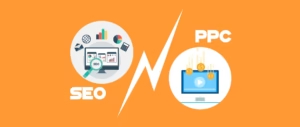
Let’s break down the key factors in a direct PCC vs SEO comparison.
| Factor | PPC (Pay-Per-Click) | SEO (Search Engine Optimization) |
| Speed of Results | Nearly Instantaneous. Traffic can start flowing within hours of campaign launch. | Slow and Gradual. It can take 4-12 months to see significant organic traction. |
| Cost Model | Pay-Per-Click. You pay for every click, regardless of the outcome. A continuous expense. | Initial Investment. Costs are associated with time, tools, and expertise. No direct cost per click. |
| Traffic Sustainability | Stops when you stop. The moment you pause your campaign or run out of budget, the traffic vanishes. | Sustainable. High rankings can bring consistent traffic for months or years with minimal maintenance. |
| Visibility Placement | Top and bottom of SERP. Appears above organic results, labeled as “Ad.” | Organic listings. Results beneath the ads. Users often trust organic results more. |
| Click-Through Rate (CTR) | Lower on average. Users often skip ads (a phenomenon known as “ad blindness”). | Higher on average. Organic results typically receive the majority of clicks on a SERP. |
| Targeting Precision | Extremely Granular. Target by keywords, demographics, location, device, time of day, and even user interests. | Keyword & Intent Focused. Primarily targets users based on the keywords they search for. Less demographic control. |
| Credibility & Trust | Perceived as an Ad. While effective, users know it’s a paid promotion. | Higher Perceived Trust. Users often view organic results as more authentic and credible. |
| Competitive Landscape | Anyone can play. You can outbid competitors for top ad spots, provided you have the budget. | Highly Competitive. It’s difficult to outrank established, authoritative domains without significant effort. |
| Analytics & Data | Immediate, rich data. Platforms provide instant data on clicks, conversions, and ROI for rapid optimization. | Slower data feedback. Takes time to gather enough data to make informed optimization decisions. |
This PPC vs SEO table illustrates a clear trade-off: speed and control vs. sustainability and trust. The choice in the PPC vs SEO dilemma isn’t about which is “better,” but which is better for your specific goal at a specific time.
Chapter 3: Beyond the Binary: The Powerful Synergy of PPC and SEO
The most advanced digital marketers don’t see PPC vs SEO as an either/or proposition. They see them as two sides of the same coin, working in a powerful synergy. Framing the discussion as a strict PPC vs SEO choice is a missed opportunity. Here’s how they work together:
1. Data-Driven Keyword Discovery
Your PPC campaigns are a goldmine for SEO. By running ads, you gather immediate, real-world data on:
- Which keywords actually convert, not just drive traffic.
- Long-tail keyword variations you may not have considered.
- Search query reports showing what users actually type, which can inform your content strategy.
You can then take these high-performing, conversion-ready keywords and create comprehensive SEO content around them, maximizing their long-term value. This is a critical strategy that moves beyond the simple PPC vs SEO debate.
2. dominating Real Estate
Why choose when you can have both? By ranking organically and running a PPC ad for the same keyword, you can dominate the search engine results page (SERP). This double presence:
- Increases your brand’s visibility and perceived authority.
- Effectively boxes out competitors from the top of the page.
- Can significantly increase your overall click-through rate for that term.
This SERP domination strategy is a prime example of why the PPC vs SEO conversation should be about integration.
3. Remarketing to Organic Traffic
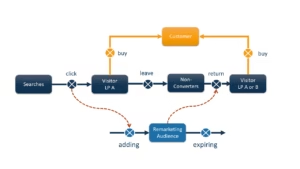
A user finds your site through an organic search, browses a product, but leaves without converting. With PPC remarketing (or retargeting), you can use a pixel to跟踪 that user and show them your ads as they browse other websites or use social media. This powerful tactic allows you to use PPC to recapture interest generated by your SEO efforts, beautifully blending the strengths of both.
4. Testing and Validating Content Ideas
Before investing months in creating a pillar page for SEO, you can use a PPC campaign to test the viability of a topic. Create a small ad campaign targeting keywords around a new product or service idea. If the ads generate clicks and conversions, it’s a strong signal that investing in SEO for that topic will yield a strong return. This reduces the risk inherent in the long-term nature of SEO.
The synergy between PPC vs SEO is where the true magic happens in digital marketing.
Chapter 4: The Cost Analysis: Investment and ROI in PPC vs SEO
Understanding the financial implications is crucial in the PPC vs SEO decision.
The Cost of PPC
PCC operates on a continuous expenditure model. You set a daily or monthly budget.
- Direct Costs: Your ad spend. This varies wildly by industry. A click for a “mesothelioma lawyer” can cost hundreds of dollars, while a click for “homemade soap recipes” may cost less than a dollar.
- Management Costs: Either the time you spend managing campaigns or the fee of a hired agency or consultant (often a percentage of ad spend or a flat fee).
- ROI: Easily measurable. You can directly track how much revenue a specific click or campaign generated against its cost. The ROI calculation for PPC is straightforward.
The Cost of SEO
SEO is an upfront investment with the expectation of a long-term payoff.
- Direct Costs: These are not paid to a search engine but to experts.
- In-House: Salaries for SEO specialists, content writers, and developers.
- Agency/Consultant: Retainers or project-based fees.
- Tools: Subscription costs for software like Ahrefs, Semrush, Moz, or Screaming Frog.
- Indirect Costs: Your time spent strategizing, creating content, and outreach.
- ROI: More difficult to measure in the short term but can be astronomical in the long run. The value of ranking #1 for a high-volume keyword and receiving free traffic for years is immense. The ROI of SEO compounds over time.
In the PPC vs SEO cost debate, PPC is an operational expense (OPEX), while SEO is a capital expenditure (CAPEX) that builds an asset (your website’s authority and ranking).
Chapter 5: The Strategic Decision Matrix: When to Use PPC vs SEO
So, which one should you choose? The answer depends on your business context. This decision matrix will guide you through the PCC vs SEO dilemma.
When to Prioritize PPC:
- Launching a New Product/Service: Need immediate visibility? PPC is your best bet.
- Short-Term Promotions: Running a 24-hour sale? SEO can’t help you here. PPC campaigns can be launched and paused instantly.
- Highly Competitive Commercial Intent: For keywords like “buy iPhone online” or “best CRM software,” the organic results are dominated by giants. PPC allows you to buy your way to the top.
- Testing Markets: Want to see if a new city or country will respond to your offer? Use geo-targeted PPC campaigns to test the waters before a full-scale expansion.
- Remarketing: As mentioned earlier, this is a uniquely PPC strength.
When to Prioritize SEO:
- Building a Brand: Establishing thought leadership and authority is a long game perfectly suited for SEO.
- Content-Driven Businesses: Blogs, news sites, and educational resources thrive on sustainable organic traffic.
- Cost-Effective Long-Term Traffic: If your customer lifetime value is high, the upfront investment in SEO can pay for itself many times over.
- Targeting Informational Queries: Users searching “how to fix a leaky faucet” are in research mode. They are unlikely to click an ad but will devour a well-ranked tutorial video or blog post. This is SEO territory.
- You Have More Time Than Money: Startups and small businesses with limited cash flow can invest “sweat equity” into SEO to grow gradually.
For most established businesses, the answer to PPC vs SEO is not a choice, but a balance. Allocate budget to PPC for immediate, measurable leads and sales, while simultaneously investing in SEO for long-term, sustainable growth and brand building.
Chapter 6: The Ultra-Unique Angle: Thinking Beyond Traditional PPC vs
SEO
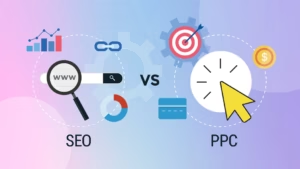
To truly win, you need to think beyond the standard PPC vs SEO playbook. Here are advanced, unique strategies.
1. The “Local Dominance” Fusion
For local businesses, the PCC vs SEO dynamic is intense. The ultimate strategy fuses both:
- SEO: Optimize your Google Business Profile (GBP) perfectly. Get reviews, post regularly, use Q&A. Create local content (“best [your service] in [your city]”).
- PPC: Use Local Search Ads that leverage your GBP, showing your star rating, address, and phone number directly in the ad. Use location-based bidding to maximize visibility in your service area.
This fusion makes your business ubiquitous for local searches, effectively ending the PPC vs SEO conflict by using both to achieve a single goal.
2. Topic Cluster Authority Modeling
Instead of targeting isolated keywords, build a topic cluster.
- The Pillar Page (SEO): A comprehensive, 3000+ word guide on a core topic (e.g., “The Complete Guide to Content Marketing”).
- Cluster Content (SEO): Individual blog posts covering subtopics in detail (e.g., “How to Write a Blog Post,” “What is SEO Copywriting?”). PPC Support: Run PPC campaigns targeting the commercial-intent keywords discovered during your cluster research. The ads drive traffic to the most relevant cluster page, which then funnels users toward the authoritative pillar content. This creates a powerful ecosystem that is far greater than the sum of its PPC vs SEO parts.https://www.seo.com/blog/seo-vs-ppc/
3. Leveraging “Zero-Click” SERPs
Modern SERPs often provide answers directly in the results (featured snippets, knowledge panels, people also ask). This can seem like a threat to both PPC and SEO.
- SEO Adaptation: Structure your content to win “Position 0” featured snippets by providing clear, concise answers to questions.
- PPC Adaptation: If a search query triggers a zero-click result, the real estate for ads becomes even more valuable. Your PPC ad might be the only way to guarantee a click to your site. Understanding this evolving landscape is key to modern PPC vs SEO strategy.
-
Balancing PPC and SEO is key to digital branding https:https://sherinn.in/digital-branding-for-business-growth-and-online-success/ success—PPC drives quick visibility and leads, while SEO builds long-term trust and organic growth.
PPC vs SEO: The Strategic Alliance for Digital Dominance
For years, the digital marketing world has been fascinated by the apparent showdown between Pay-Per-Click advertising (PPC) and Search Engine Optimization (SEO). The conventional PPC vs SEO narrative typically frames them as rivals: the swift, paid solution versus the gradual, organic approach. However, this perspective fundamentally misunderstands their true relationship. The most successful digital strategies don’t choose between PPC vs SEO – they harness both in a powerful alliance that delivers superior results.
Moving Beyond the False Dichotomy
The traditional PPC vs SEO comparison creates an artificial choice that doesn’t reflect modern digital marketing realities. Rather than viewing them as competing forces, smart marketers recognize that PPC vs SEO represents complementary tools in a comprehensive strategy. This evolved understanding of PPC vs SEO transforms how businesses approach digital growth, moving from either/or thinking to both/and execution.
The Speed vs Sustainability Paradox
At first glance, the PPC vs SEO debate seems to present a simple choice between immediate results and long-term growth. PPC offers instant visibility – you can literally turn on traffic within hours. SEO requires patience, often taking months to show substantial results. However, the sophisticated approach to PPC vs SEO recognizes that you don’t have to choose one over the other. You can use PPC for immediate impact while simultaneously building your organic foundation through SEO.
The Data Bridge: Connecting PPC Insights to SEO Strategy
One of the most powerful aspects of the PPC vs SEO relationship is the data connection. PPC campaigns serve as real-time laboratories, providing immediate insights into what actually converts. You can test different keywords, ad copy, and landing page approaches through PPC, then use these insights to inform your SEO strategy. This data-driven approach to PPC vs SEO integration allows for continuous optimization of both channels based on actual performance metrics rather than assumptions.
SERP Dominance: The Visible Power of Integration
-
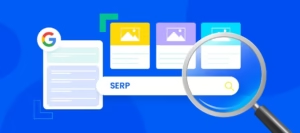
The combined force of PPC vs SEO becomes most apparent on the search engine results page. By appearing in both paid and organic results for your target keywords, you can dominate search real estate. This dual presence in the PPC vs SEO landscape significantly increases brand visibility and click-through rates. Users who see your brand in multiple positions on the SERP develop greater trust and are more likely to click through to your site.
The Budget Conversation: Investment vs Expense
The financial discussion around PPC vs SEO often centers on cost-effectiveness. PPC requires ongoing spending to maintain visibility, while SEO represents a long-term investment in your digital assets. The modern perspective on PPC vs SEO budgeting recognizes that they serve different purposes and can be funded accordingly. PPC can be viewed as an operational expense for immediate lead generation, while SEO is a capital investment in long-term digital property value.
The Remarketing Connection: Closing the Loop
The PPC vs SEO relationship shines particularly bright in remarketing scenarios. Visitors who find your site through organic search (SEO) can be retargeted with PPC campaigns as they browse other websites. This creates a seamless marketing ecosystem where PPC vs SEO isn’t a battle but a coordinated effort to move prospects through the customer journey. Each channel supports the other in converting interested visitors into customers.
Quality Score Synergy: The Hidden Benefit
One of the least discussed but most valuable aspects of the PPC vs SEO relationship is how they influence each other’s performance metrics. A well-optimized website (thanks to SEO) typically has better landing page experience, which improves your PPC Quality Scores. Higher Quality Scores mean lower costs per click and better ad positions. This hidden synergy between PPC vs SEO demonstrates how investing in one channel can directly benefit the other.
Testing Ground: Using PPC to De-Risk SEO Investments
-
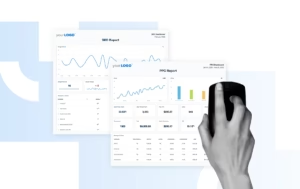
A sophisticated approach to PPC vs SEO involves using PPC as a testing ground for SEO investments. Before committing resources to creating extensive content for SEO, you can use PPC to test different messaging approaches and keyword variations. This practical application of PPC vs SEO strategy helps ensure that your SEO efforts are focused on opportunities that have proven conversion potential.
The Future: Beyond Channel Silos
The evolution of PPC vs SEO strategy is leading toward completely integrated marketing teams. Forward-thinking organizations are moving beyond siloed approaches where PPC and SEO teams operate independently. Instead, they’re creating unified growth teams that leverage both PPC vs SEO methodologies seamlessly, with shared goals and integrated strategies.
Implementation Framework: Making PPC and SEO Work Together
To successfully implement an integrated PPC vs SEO strategy, start with these steps:
- Shared Keyword Research: Conduct keyword research that serves both PPC and SEO needs
- Data Sharing Protocol: Establish systems for sharing performance data between teams
- Unified Conversion Tracking: Implement consistent conversion tracking across both channels
- Regular Strategy Sessions: Schedule monthly meetings between PPC and SEO specialists
- Integrated Reporting: Create reports that show how both channels contribute to business goals
Conclusion: PPC AND SEO – The Final Verdict
The journey through the intricate world of PCC vs SEO reveals a clear conclusion: framing it as a battle is a strategic error. The most successful businesses do not choose between PCC vs SEO. They harness both.
- PPC is your spear—agile, precise, and powerful for immediate strikes. It’s for generating leads now, testing markets, and capitalizing on high-intent moments.
- SEO is your shield—durable, resilient, and built over time. It’s for building lasting authority, creating a sustainable asset, and protecting your business from the volatility of advertising costs.
Your task is not to decide between PPC vs SEO, but to determine the right balance for your business goals, budget, and timeline. Start with PPC to generate initial data and cash flow. Simultaneously, build your SEO foundation for long-term stability. Use the data from one to inform the strategy of the other.
Stop seeing PPC vs SEO. Start seeing PPC and SEO. That is the ultimate strategy for digital marketing dominance. By integrating these two powerful forces, you move beyond the simplistic PPC vs SEO debate and into a realm of compounded, sustainable growth. The discussion of PPC vs SEO is ultimately about building a holistic strategy, and that is the unique advantage you now possess.